Source electric start air cooled carburetor for Scooters, Engines, and Motorcycles
Find 30 listings for electric start air cooled carburetor units suitable for scooters, engines, and motorcycles. Buyers can compare specifications like stroke type, cylinder count, and certifications including CCC and ISO9001 to identify suitable components for their projects.
Key considerations
Products List


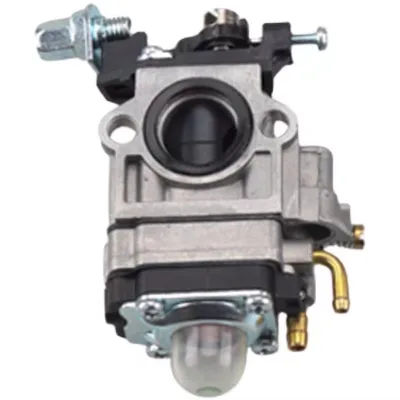
Walbro 27 Wb27 Carburetor Carb
$16.07 - $25.71
Moq: 100
Ningbo Eastar Electromechanical Industrial Trading Co., Ltd.




Comprehensive Sourcing Guide
Sourcing Guide for Electric Start Air Cooled Carburetor Systems
Understanding Core Technical Specifications and Configuration
When sourcing an electric start air-cooled carburetor system, buyers must first establish a clear understanding of the fundamental technical architecture that defines this component class. The core keyword combination points to a specific subset of internal combustion engine components where the fuel delivery mechanism (carburetor) is integrated with an ignition system capable of electric starting and a cooling method relying on airflow rather than liquid. Based on observed product attributes, these systems frequently utilize a four-stroke principle, specifically operating through a compression stroke cycle. This distinguishes them from two-stroke engines and implies a specific sequence of intake, compression, power, and exhaust phases that the carburetor must support.
The physical configuration of the carburetor itself is a critical variable. Data indicates a prevalence of the "Horizontal Draught" type, which refers to the orientation of the air-fuel mixture flow. This configuration is often preferred in specific scooter and motorcycle applications for its packaging efficiency and compatibility with air filters. The cylinder configuration is consistently observed as a single cylinder, with a specific cylinder count of one. This simplifies the fuel mapping requirements but demands precise tuning to ensure smooth operation across the RPM range.
The engine type associated with these units is often categorized as a "Fuel System" or "Power Machine" within the internal combustion domain. The thermal machine classification is explicitly "Internal Combustion Type," confirming that the energy transformation occurs via the burning of fuel. The fuel source is identified as gasoline, which dictates the material compatibility of the carburetor body and internal jets. In terms of body construction, the material is frequently listed as Aluminium or Alloy, offering a balance of weight reduction and thermal conductivity. Some specifications also reference specific model numbers such as GY6 125 150, FZ-16, AN125, ST90, and 178SA, which serve as industry-standard references for displacement and engine architecture. The "178SA" designation, for instance, often correlates with a specific carburetor model number and engine block type, requiring buyers to verify exact fitment against their existing engine block.
Compliance, Certification, and Regulatory Verification
Navigating the compliance landscape is essential for international procurement, as different markets enforce varying standards for engine emissions and safety. The observed product data reveals a diverse array of certifications that suppliers may claim. Commonly cited certifications include CCC (China Compulsory Certification), ISO9001, CE, RoHS, and EEC. It is important to treat these as observations of what is listed on product pages rather than universal guarantees for every unit. For instance, while some listings pair CCC with ISO9001, others include CE and RoHS, and some mention EEC (Economic Commission for Europe) standards.
Buyers must verify the specific validity of these certifications for their target market. The presence of "CCC" suggests compliance with Chinese domestic standards, which is a baseline for manufacturing but may not suffice for export to Europe or North America without additional testing. The "CE" mark indicates conformity with health, safety, and environmental protection standards for products sold within the European Economic Area, while "RoHS" (Restriction of Hazardous Substances) addresses material composition regarding lead, mercury, and other toxins. The "ISO9001" certification relates to the quality management system of the manufacturer rather than the product itself, though it is a strong indicator of process consistency.
Furthermore, some listings mention "SGS" as a standard or verification body, and others reference "Metal" or "Color Box" as product standards, which likely refer to packaging or material grades rather than regulatory compliance. A critical observation is the variation in certification strings; one entry lists "CCC,CE,ISO9001" while another lists "TSRoHS,E-Mark,CE,ISOCOP,CCC." The "E-Mark" is particularly relevant for vehicle components intended for European markets. Buyers should not assume that a single listing covers all these bases. Instead, they must request specific test reports or certificates of conformity that match the regulatory requirements of the destination country. The absence of a specific certification in a listing does not necessarily mean the product is non-compliant, but it does require proactive verification before placing an order.
Cost Drivers and Pricing Structure Analysis
The pricing structure for electric start air-cooled carburetor systems is influenced by a complex interplay of factors, including material costs, certification overhead, and order volume. The observed price range in the market spans from 0.1 to 153 USD, a wide variance that reflects differences in product quality, brand positioning, and included accessories. This range suggests that the lowest price points likely correspond to basic, unbranded components or those with minimal packaging, while the higher end may include fully assembled units with advanced tuning, premium packaging, or bundled electric start kits.
The Minimum Order Quantity (MOQ) is another significant cost driver, with observed ranges spanning from 1 to 600 units. A low MOQ of 1 allows for sample testing and small-batch procurement, which is crucial for buyers validating a new supply chain, but it often comes with a higher unit price. Conversely, an MOQ of 600 indicates a bulk manufacturing setup, likely resulting in a lower per-unit cost but requiring significant capital commitment and storage capacity. Buyers must calculate the total landed cost, which includes the unit price, shipping, duties, and the opportunity cost of capital tied up in inventory.
Material composition plays a direct role in cost. Listings specifying "Aluminium" or "Alloy" bodies generally command a premium over those with less specified materials due to the higher cost of raw aluminum and the machining processes required. Additionally, the inclusion of specific technical features, such as the "Solid-fuel Catalyst and Air Aeration" fuel saver type, may add to the manufacturing complexity and cost. The "Quality Level" is also a factor, with some products explicitly rated as "a Quality" or "Class a," suggesting a tiered pricing model based on performance and durability expectations. Buyers should be wary of prices that seem abnormally low, as they may indicate substandard materials or a lack of necessary certifications.
Typical Applications and Market Deployment
The application of electric start air-cooled carburetor systems is primarily centered around the two-wheeled transportation sector, specifically motorcycles and scooters. The observed product data explicitly links these components to models such as the "Fz-16," "FZ-16," "AN125," "ST90," and "Scooter 90CC." These model names indicate a strong alignment with the 90cc to 150cc displacement range, which is a popular segment for urban commuting and light utility vehicles in developing markets. The "GY6 125 150" specification further reinforces this, as the GY6 engine platform is ubiquitous in the global scooter market.
The "Main Market" for these products is identified as South America, suggesting that the design and specifications are optimized for the road conditions, fuel quality, and regulatory environment of that region. However, the presence of "CE" and "EEC" certifications implies that these products are also intended for or capable of being sold in European markets. The "Electric/Kick" start attribute indicates versatility, allowing the engine to be started via an electric motor or a manual kick starter, a feature highly valued in markets where battery reliability can be inconsistent.
The "Internal Combustion Type" and "Four Stroke Principle" confirm that these systems are designed for engines that require a dedicated fuel delivery system to manage the air-fuel mixture efficiently. The "Horizontal Draught" carburetor type is particularly suited for the compact engine layouts found in scooters, where space is at a premium. The "Air-Cooled" aspect is a defining characteristic, meaning these systems are designed for engines that rely on fins and airflow for heat dissipation, eliminating the need for a radiator and coolant system. This makes them ideal for applications where simplicity, low maintenance, and weight reduction are prioritized over high-performance thermal management.
Supplier Evaluation and Sourcing Strategy
Evaluating suppliers for these components requires a rigorous approach that goes beyond simple price comparison. The observed data shows a concentration of suppliers originating from "China" and specifically "Ningbo China," a major manufacturing hub for automotive and motorcycle parts. While this indicates a mature supply chain, buyers must verify the specific capabilities of individual suppliers. The "Customization: Available" attribute suggests that many suppliers are willing to adapt their products to specific buyer requirements, such as changing the carburetor model number or adjusting the packing specifications.
When assessing a supplier, buyers should look for evidence of the claimed certifications. A supplier claiming "CCC, ISO9001, CE" should be able to provide valid certificates that are current and applicable to the specific product model. The "Standard Component" and "Technics: Press" attributes indicate that the manufacturing process involves pressing techniques, which is a standard method for forming metal parts. Buyers should inquire about the quality control processes used during this pressing stage to ensure dimensional accuracy.
The "Delivery Time" of "Within 15 Days After Order Confirmation" is a critical metric for supply chain planning. This lead time suggests a relatively agile manufacturing process, but buyers must confirm if this applies to stock items or custom orders. The "Yog Packing" and "Color Box" packaging options indicate that suppliers offer various levels of retail-ready packaging, which can impact the final presentation of the product. Buyers should also consider the "prod_packing" details, as improper packaging can lead to damage during transit. A supplier that offers robust "Carton Box" packaging is preferable for international shipping.
Quality Control and Long-Term Procurement Considerations
Ensuring long-term success in sourcing these components requires a robust quality control (QC) framework. The observed "Quality Level: a Quality" and "Quality: Class a" attributes suggest that suppliers categorize their products based on performance tiers. Buyers should establish clear acceptance criteria that go beyond these generic labels. This includes verifying the "Cylinder NO.: 1 Cylinder" and "Cylinder: Single Cylinder" specifications to ensure the carburetor matches the engine block precisely. Mismatches in cylinder count or carburetor type (e.g., Horizontal Draught vs. Vertical) can lead to immediate failure.
The "Fuel Saver Type: Solid-fuel Catalyst and Air Aeration" is a specific feature that should be tested for actual performance. Buyers should request sample units to test fuel efficiency and engine smoothness under load. The "Material: Alloy" and "Body Material: Aluminium" should be verified through material analysis to ensure they meet the required strength and corrosion resistance standards. The "Standard Component" attribute implies that the parts should be interchangeable with other standard components, which is vital for aftermarket support and repairability.
For long-term procurement, buyers should consider the "Main Market" dynamics. If the primary market is South America, the supplier should have experience with the specific fuel blends and environmental conditions of that region. The "Electric/Kick" start system should be tested for reliability, as the electric starter motor is a common point of failure. Additionally, the "Delivery Time" of 15 days should be monitored over multiple orders to ensure consistency. Buyers should also evaluate the supplier's ability to handle "Customization" requests, as market demands may shift, requiring changes in model numbers or packaging.
| Feature Category | Observed Attributes | Verification Requirement |
|---|---|---|
| Engine Type | Four Stroke, Internal Combustion, Single Cylinder | Confirm cylinder count and stroke cycle |
| Carburetor Type | Horizontal Draught, 178SA Model | Verify fitment to engine block |
| Cooling System | Air-Cooled | Check fin design and airflow path |
| Start System | Electric/Kick | Test both electric and kick start mechanisms |
| Materials | Aluminium, Alloy | Perform material composition analysis |
| Certifications | CCC, ISO9001, CE, RoHS, EEC | Request valid, current certificates |
| Packaging | Carton Box, Color Box, Yog Packing | Inspect packaging for damage resistance |
| Lead Time | Within 15 Days | Monitor actual delivery times over time |
In conclusion, sourcing an electric start air-cooled carburetor system involves a careful balance of technical verification, compliance checking, and supplier evaluation. By focusing on the specific attributes observed in the market, such as the four-stroke principle, horizontal draught design, and the range of certifications, buyers can make informed decisions that ensure the reliability and performance of their final products. The wide price range and MOQ flexibility offer opportunities for both small and large buyers, but success depends on rigorous due diligence and clear communication with suppliers regarding specifications and quality expectations.
FAQs
What certifications are common for electric start air cooled carburetors?
Common certifications include CCC, ISO9001, CE, and RoHS. Buyers must verify specific validity for their target market, as listings vary and some include EEC or SGS standards alongside basic compliance marks.
Which carburetor type is most prevalent for these systems?
The horizontal draught type is the most prevalent configuration observed. This orientation suits compact engine layouts in scooters and motorcycles, facilitating efficient air-fuel mixture flow within limited space.
Can buyers customize the packaging for these carburetor units?
Yes, customization is available for packaging options like carton boxes or color boxes. Suppliers often offer flexible packing solutions such as Yog Packing to meet specific retail or shipping requirements.
How long is the typical delivery time after order confirmation?
The typical delivery time is within 15 days after order confirmation. This lead time applies to standard orders, though custom requests may require additional processing time from the manufacturer.
What material is typically used for the carburetor body?
Aluminium or alloy is typically used for the carburetor body. These materials provide a balance of weight reduction and thermal conductivity, which is essential for air-cooled internal combustion engines.
Where are these carburetor systems primarily manufactured?
These systems are primarily manufactured in China, with specific hubs like Ningbo. Buyers should verify the exact origin, as some listings specify Ningbo while others simply state China.
What is the main market for these four-stroke carburetor systems?
The main market identified is South America, though products often carry CE or EEC marks for European sales. This indicates the design is optimized for developing markets while maintaining export compliance.